
September 2026 · Phoenix Drywall Repair LLC

Walk through most Phoenix homes and you'll find at least one beat-up wall corner — a chipped edge near the front door, a dented corner in a hallway, a crack running along an outside corner from floor to ceiling. This damage is almost always a drywall repair job, and the piece at the center of it is called corner bead.
Corner bead is simple once you understand what it does. But repairing it properly — so the corner looks right under Phoenix's bright natural light and holds up long-term — is less straightforward than it looks.
Corner bead is a long, straight strip of metal or vinyl installed over every outside (protruding) drywall corner before the wall is finished. If a wall changes direction outward — like the edge of a wall next to a doorway, the corner of a hallway, or the edge of a wall column — there's corner bead on it.
Its job is twofold: it protects the exposed drywall edge from impact damage, and it gives finishers a straight, consistent edge to skim joint compound over. Without corner bead, outside corners would chip and crumble almost immediately. With it, they're durable — but not indestructible.
Metal corner bead (standard steel or galvanized) is the most common type in Valley homes. Vinyl bead is used in some newer construction. You'll also find paper-faced metal bead and flexible vinyl bead used on curved corners.
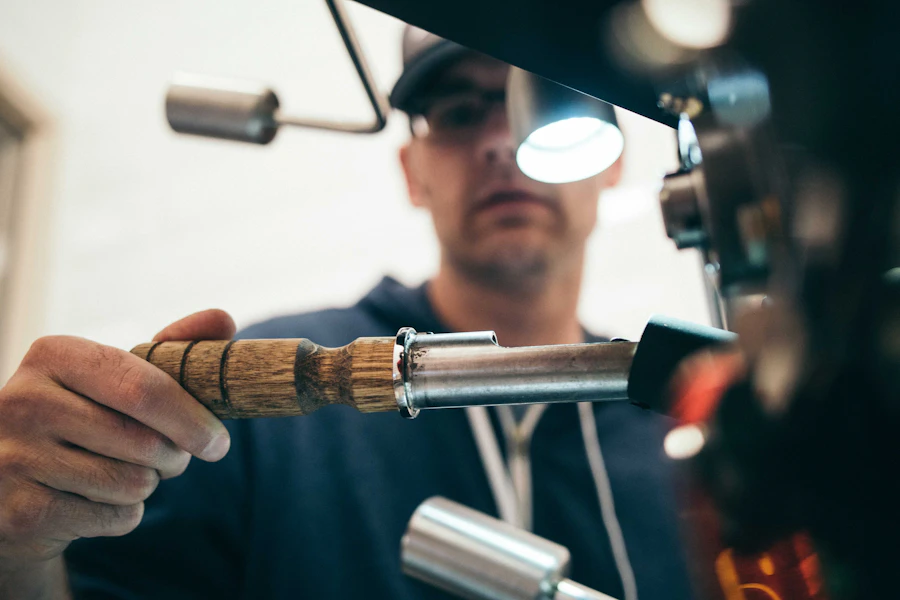
Repairing corner bead requires removing the damaged section and resetting the bead before finishing
Corner damage is universal — it happens in every climate — but Phoenix homes have a few specific conditions that make corners wear faster or fail differently than in other parts of the country.
Furniture and move-in damage. Phoenix has one of the highest relocation rates in the country. A lot of Valley homes have been moved into three, four, or five times. Every move brings couches, bed frames, and appliances past hallway corners at awkward angles. That concentrated impact load adds up.
Stucco-to-drywall transitions. In many Phoenix homes, interior corners are directly adjacent to the stucco envelope of the building. Any movement in the stucco or the framing behind it can telegraph stress directly into the corner bead, causing cracks that run vertically along the bead rather than randomly across the wall.
Thermal expansion. Arizona's temperature swings — from 40°F winter nights to 115°F summer days — cause expansion and contraction cycles in framing lumber and metal corner bead. Over time, this can loosen the bead from the wall or cause hairline cracks in the compound around it.
Rental wear. Phoenix has a large rental market. Landlords doing quick turnovers don't always address corner damage properly — a thick coat of flat paint over a chipped corner doesn't fix it, and the problem gets worse with each tenancy.

A properly finished corner looks straight and smooth — visible damage usually means the bead itself needs to come out
Not all corner damage is the same, and the repair approach depends on what actually happened:
Surface chips. The compound over the bead has chipped away, exposing the metal bead underneath. The bead itself is still straight and tight to the wall. This is the easiest repair — the damaged area is skim coated, retextured, and painted.
Dents. The bead itself has been physically bent inward. You can see a divot along the corner edge. Compound alone won't fix this — the bead is permanently deformed. The dented section of bead needs to be removed and replaced, or the dent needs to be carefully worked back into shape (rarely possible with steel bead) before finishing.
Loose bead. The corner feels springy or soft when you press it. The bead has come away from the wall — the fasteners pulled through, or the drywall behind the bead was damaged. The bead needs to be resecured or replaced before any finishing work makes sense.
Vertical cracks along the corner. A crack running continuously down the corner, often with the bead still intact. This is usually a structural movement issue — settlement, framing deflection, or thermal cycling. The crack needs to be opened, the cause assessed, and the repair done in a way that accounts for ongoing movement (flexible compound, mesh tape backing, or in some cases a control joint).
Rust bleed-through. On older homes with standard steel (non-galvanized) corner bead, rust spots appear through the painted finish — orange or brown staining along the corner edge. This requires removing the rusted bead entirely and replacing with galvanized or vinyl bead, followed by a proper stain-blocking prime coat before painting.
A surface chip repair is straightforward: clean the area, apply setting compound in thin coats, texture to match, prime, and paint. Two visits, typically — one to patch and one to check, touch up, and texture.
A dent or loose bead repair involves more steps. The damaged section of bead is carefully cut out using a utility knife and tin snips (for metal bead) or a razor (for vinyl). The new bead is cut to length, set tight to the corner, and fastened with drywall screws or staples depending on the bead type. Three coats of joint compound — each coat feathered out wider than the last — bring the corner back to flush. After full drying, the area is sanded, textured to match, primed, and painted.
Rust replacement is a full removal job: the entire length of bead (floor to ceiling, or wall to wall) needs to come out. Partial replacement leaves visible transitions. The wall surface around the old bead may need repair where the old fasteners pulled through.
The quality of the final result depends heavily on texture matching and paint. In Phoenix homes with heavy orange peel or knockdown texture, getting a repaired corner to disappear into the surrounding wall requires skill and the right equipment — a texture sprayer, the right compound consistency, and experience reading how the texture will look once dried and painted.
Surface chips are within DIY range for someone comfortable with joint compound. YouTube has reasonable tutorials, and the materials are available at Home Depot or Lowe's. The main failure points are: applying compound too thick (it cracks on drying), not feathering wide enough (leaving a visible ridge), and getting the texture wrong.
Dent and replacement repairs are harder. Cutting out the old bead without gouging the surrounding drywall takes practice. Getting the new bead perfectly straight and tight before fastening matters — any gap shows up in the finished corner. And again, texture matching is where DIY repairs usually look obviously patched.
For corners in a high-visibility location — entry hallways, living rooms, main corridors — the cost of a professional repair is usually worth it over a patch that looks off for the next ten years.
Cost depends on the extent of damage and the length of bead involved:
These ranges assume interior residential walls with standard texture. Smooth Level 5 walls or custom finishes cost more. See our full Phoenix drywall repair cost guide for broader pricing context.
Phoenix real estate moves fast, and buyers and their inspectors notice wall condition during walkthroughs. Chipped or dented corners — especially in entryways and main halls — read as deferred maintenance. A $200–$400 repair can remove a negotiating point and improve first impressions. Many sellers address drywall and paint together as part of a pre-listing refresh. See our post on pre-sale drywall repair in Phoenix for more on what to prioritize.

A well-repaired corner disappears into the wall — no ridges, no chips, texture matched to the surrounding surface
Call, text, or use our instant quote tool. We answer questions directly — no runaround.
(480) 277-6884 ⚡ Instant Quote →Related: Drywall Repair Phoenix · Texture Matching · Back to Blog
External resources: Verify a License — AZ Registrar of Contractors · Corner Bead at Home Depot · Corner Bead at Lowe's